

Beyond the Plan: A Journey from Singapore Law to the United Nations

When Stephanie Teh left private practice to pursue a Master of Public Policy at Oxford, she did not know exactly where the decision would lead. Years later, her career has taken her from Singapore to Oxford, London, Rome and New York, where she now works in the international public-interest space.
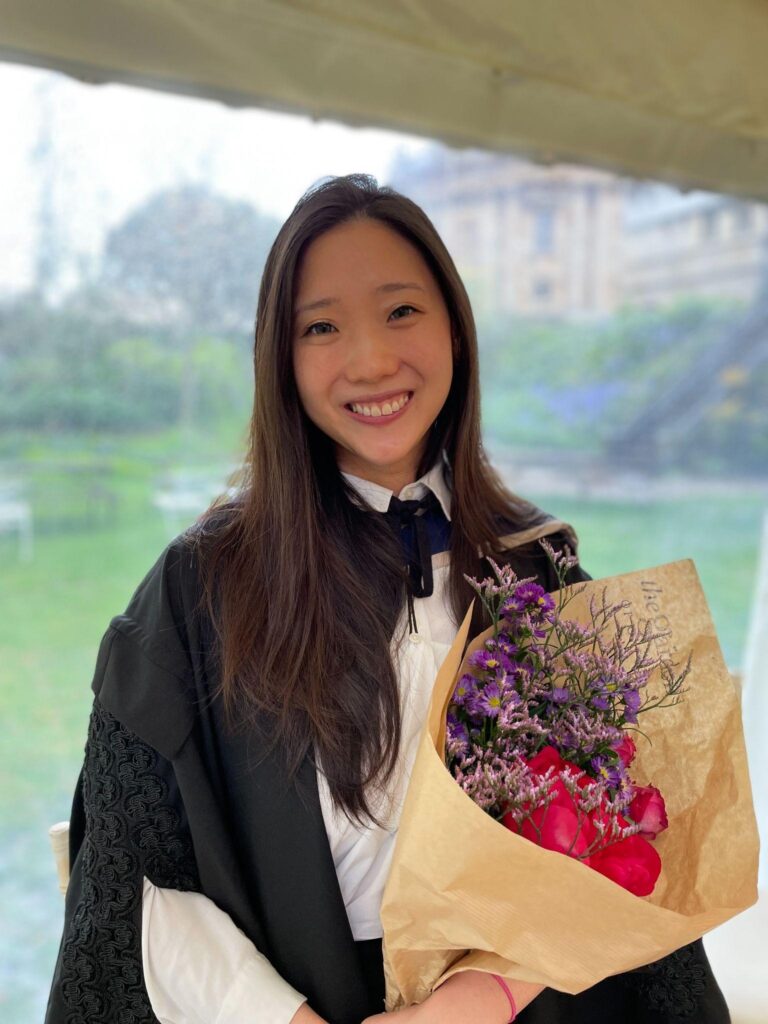
As an internal investigator for the United Nations, Stephanie contributes to the oversight of UN funds and personnel. In a typical week, Stephanie might review a complaint of fraud, interview witnesses in a harassment case, or work through allegations of sexual exploitation and abuse in a conflict-affected region. Her work spans countries, cultures and operating environments, yet it draws on the same skills she built in Singapore legal practice. Getting here meant stepping off a more traditional career path, without knowing exactly where it would lead.
Drawn to Law's Practical Impact
Stephanie came to law school after studying humanities in junior college. “I was attracted to law because it combines intellectual rigour with practical, real-world applications and its capacity to impact lives,” she reflected. Stephanie also had a longstanding interest in public-interest work. Before entering practice, she volunteered with organisations such as Justice Without Borders, which advances access to justice for migrant workers. That interest would remain a thread throughout her career, although at the time she did not know exactly where it would lead.
Stephanie spent several years building her career as a dispute resolution lawyer in practice, eventually reaching the level of Senior Associate at WongPartnership LLP. The early years were a steep learning curve, but she counts herself “very fortunate to have a supportive team” around her.
By the time she reached a more senior stage of practice, she wanted to develop “broader macro exposure” to how law interacts with and contributes to the wider world. She viewed further studies as an opportunity to expand her horizons. “I did not have a clear idea of where it would lead me, but I chose to study public policy because I wanted to broaden my perspective, develop cross-disciplinary skillsets and explore possibilities beyond what I had experienced in legal practice.”
An Education Beyond the Classroom
Oxford was not entirely unfamiliar territory. As a law student at the National University of Singapore, Stephanie had previously travelled there for a moot competition and found herself captivated by Oxford’s history and atmosphere.
When she later enrolled in the Master of Public Policy programme at the Blavatnik School of Government, she was drawn by its blend of academic knowledge and practical application.
The people left the deepest impression. Her cohort brought together students from more than 50 countries, with backgrounds in law, policy, economics and finance. “Being exposed to such a range of perspectives broadened the way I think about policy, law and the world more generally,” she says.
Some of the most meaningful conversations came through Discomfortable Discourse, a student-led initiative where participants shared personal experiences and perspectives, from living through conflict and trauma to deeply held political views. She shared, “People felt comfortable sharing their experiences, asking difficult questions, and learning from one another. What I found particularly meaningful were the friendships and connections built with people who had grown up in very different contexts, but shared a common optimism about creating a better world.”
A Career Across Continents
After Oxford, Stephanie moved to London for strategic litigation work for a foundation. She then joined the United Nations as an internal investigator, first in Rome and now in New York.
Her role involves assessing and investigating allegations of wrongdoing involving UN personnel and funds, including allegations of fraud, corruption, harassment and sexual misconduct. A typical week can include reviewing complaints, conducting interviews, researching and drafting reports. The work also varies across UN entities, as different mandates shape the contexts, types and geographic settings of cases their investigators encounter. Stephanie has worked across mandates ranging from food security to sexual and reproductive health, giving her exposure to very different operating environments.
She describes the role as a blend of her experiences in the private and non-profit sectors.
The environment may be far removed from private practice, but the underlying skills are familiar. “There are many similarities with legal practice, particularly with internal white-collar investigations”, she says. Analysing evidence, research, drafting, oral advocacy and building a case from facts all remain central. The key difference is a focus on neutral fact-finding rather than recommending disciplinary sanctions.
The discipline developed through Singapore legal training continues to serve her well. “The rigour of Singapore legal training and practice provides a strong framework for analysing complex issues and working through information in a structured and nuanced manner.” She adds, “I find the care, nuance and precision honed in legal practice particularly valuable when preparing interview questions or drafting reports, where the choice of words is fundamental to how information is understood.”
What makes the work both meaningful and challenging, she says, is its human dimension. Investigations can involve engaging directly with vulnerable victims and other affected individuals, including cases of sexual exploitation and abuse involving beneficiaries in precarious circumstances and conflict-affected regions. “This makes it particularly important to approach each case with sensitivity and care, prioritising the well-being and safety of those involved.” Sometimes that means adapting the approach to a case, or deciding not to pursue a line of inquiry at all where doing so could cause harm.
Asked what she enjoys most, Stephanie points to the variety of the work, which spans multiple countries, and to working with colleagues from very different backgrounds. She is equally candid about the realities of working within a large international organisation. “One of the challenges is navigating different stakeholders, processes and priorities, which can make progress more complex than it might be in private practice.”
Finding Community Abroad
Starting over in a new city has not always been easy, Stephanie admits. What has helped most is building a community. “I’ve been lucky to find friends through work and existing networks, including fellow Singaporeans.”
In Rome, that included priests and sisters in the Catholic Church community. Now in New York, she relishes its energy, arts and culture, and sense of possibility.
No Two CVs Alike
Stepping away from a more linear career progression in Singapore has meant accepting that the next step is not always clear. “I’ve learnt to be more comfortable with uncertainty, recognising that it exists alongside the excitement of a future that continues to evolve.”
Asked where she sees herself in the years ahead, she is honest that she does not know at this point. A mentor once told her that no two CVs are quite the same in the UN and international public-interest space. Careers are shaped by personal choices, opportunities and circumstances. Stephanie now thinks less about a particular title or destination than about the professional she wants to become, approaching each step with intention.
As for young Singapore-qualified lawyers interested in international or policy-facing careers, Stephanie’s advice is to stay curious and proactively seek opportunities that broaden skillsets, “to gain international exposure through work, further studies or volunteering, and actively pursuing opportunities that interest you.”
Looking back, she sees a clear connection between her legal training and the work she does today. “Moving into this field has allowed me to combine my legal training and cross-disciplinary skills with my desire to contribute to the public interest.”