

Stay the Course or Switch Lanes? Rethinking the Legal Career Path


A fresh law graduate asked to describe their career ambitions might tell you about their plans to gun for partnership or a move in-house. Yet a legal career rarely follows a neat arc. It may begin with a training contract and end up somewhere entirely unexpected: in a frontier economy just opening up to foreign investment, at the table drafting contracts for the OceanXplorer vessel that would explore the farthest underwater frontiers, in the kitchen of an Italian restaurant, and behind the counter of an F&B pop-up at musical festivals.
Behind every career arc lie many decisions on when to stay, when to leave, and when to try something entirely new. Some lawyers find their convictions early on and others allow curiosity and circumstance to shape their paths.
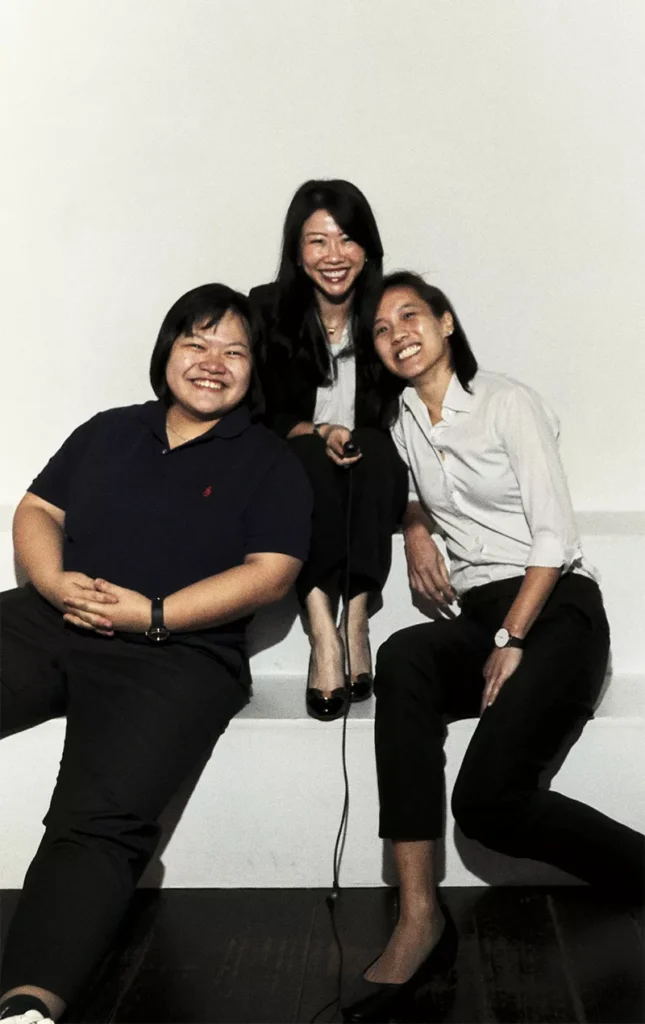
The journeys of Mathea Lim and Claudia Petrat show that there is no single way of being a lawyer. A professional identity in law can take shape in markedly different and colourful ways.
Knowing Early or Not at All
For Mathea, her passion for family law revealed itself early at the start of law school. She traces it back to “way (way) back during freshmen orientation at NUS,” when she volunteered at legal clinics. Those short sessions revealed how deeply family law touches everyday life. “That definitely left an impression on me, helping me to see the sheer extent to which family law touches everyone in society.” A Family Law class later confirmed what she already suspected. “From then on, I felt the constant draw towards the practice of family law.”
Mathea trained in general disputes at Drew & Napier, valuing its discipline and structure. But she knew she wanted something more personal, “As exciting as general disputes work may be, I felt that family law offered me a pathway to engage directly with the clients and parties.”
For Claudia Petrat, the starting point looked very different. “I definitely had no idea of where I was headed,” she says of her early career. After interning at the Thomson Reuters Foundation in London and travelling Southeast Asia, she returned to Singapore and entered regulatory practice at Rajah & Tann. Regulatory law sat “at the intersection of power, markets, and values” and the work intrigued her.
She enjoyed the novel problems and loved her team, including a stint in Myanmar just as the country was opening up to foreign investment. The period was exhilarating and occasionally chaotic. She laughs about bouts of food poisoning, including one episode where she found herself throwing up in the middle of a meeting with a government official. Yet beneath the excitement, doubts crept in. “Fairly early on,” she reflects, she began to struggle with the overhanging question of “work-life balance” and ultimately the “meaning of it all.”
Staying the Course or Taking the Plunge
Mathea’s decisive move came when she left big-firm disputes work for a boutique family practice at PKWA Law Practice LLC. She walked away from security without a guarantee that the new path would suit her. But still, she trusted the pull she felt, “I just felt that I owed it to myself to try family law out, and that there was no better time than the present!”
At the boutique firm, immersion accelerated her growth. She worked almost exclusively under the Family Justice Rules. “Practically speaking, I became a lot more confident as a lawyer… the ‘gut instinct’ element of experience is something that cannot be discounted.”
Claudia’s most daunting move came in the opposite direction, away from private practice. A push factor was the toll that the stress from practice was taking on her health, as she put on 12kg in her late 20s and was unable to walk up a flight of stairs without feeling out of breath. “I recall playing a game of laser tag with trainees, and gassed out after 5 minutes. As someone who had been pretty sporty at university, this hit me hard.”
“Pivoting from private practice to an in-house role felt most daunting. I worried about leaving too early, about being left behind.” She took the plunge anyway.
This decision brought her to unexpected places. While at the BBC, she was selected for a programme that brought her to Bristol for nearly a month with the Natural History Unit. A lifelong David Attenborough fan, she describes it as a “total nerd-out moment.” She met world-class researchers and assisted with contracts for a co-production between BBC Studios, National Geographic and Ray Dalio’s research vessel.
The project that would eventually become Ocean Xplorers. “Seeing how the elements came together was amazing. How do you think about risk when you’re planning to take a crew to the deepest parts of the ocean?” Seeing the documentary hit screens five years later was a highlight for her.
Reinvention and Return
Both journeys took many detours along the way.
Family practice took an emotional toll on Mathea. She felt “a bit burnt out from practice” and stepped away. She worked briefly as a line cook in an Italian restaurant. “I went from being emotionally spent to physically spent – being a line cook is hard!” A colleague later sent her a written judgment in a case she had handled. Reading it, she realised she was “ready to get back into the thick of things.” She returned with firmer boundaries. “I made a conscious decision to keep work and all its emotions separate from my own personal life.”
Claudia’s detours were more outward-facing. She co-founded Crack, an eggs-based F&B concept with two friends. Their signature “Otah” scotch eggs quickly found an audience at festivals and farmers’ markets. They ran pop-ups at Garden Beats, Laneway, Singapore Night Festival, and Kranji Farmers Market, pulled all-nighters, and sang as they prepped. “Even though we pulled all-nighters they felt nothing like all-nighters you pull at a law firm.” The concept gained enough traction for them to pitch successfully for a six-month incubator space at Timbre+. Eventually, they chose not to invest further in a brick-and-mortar space.
Claudia chose to remain in her day job, a decision that soon allowed her to fulfil a dream of a stint with the BBC’s Natural History Unit. Crack remains, in her words, “a fond memory of a special time where we created something of value and delivered it to happy customers.” And she leaves the door slightly ajar. Perhaps, one day, the team might reunite for an ad-hoc pop-up.
Next Chapters
If Mathea and Claudia’s early chapters were exciting, their next ones remain just as deliberate.
For Mathea, the future builds on the clarity she found early. She and a couple of friends are in the process of setting up a new specialist family practice. A “big leap”, as she calls it. The firm will focus exclusively on family law. Her decision to commit fully to the work that feels most meaningful reflects the same instinct that led her to leave general disputes practice years ago.
Her aspirations are not limited to the professional. She has set a Goodreads challenge of 50 books for 2026, as a personal challenge to pace herself and build a sustainable life in practice.
For Claudia, she continues her in-house role at Airbnb. Its ethos of belonging anywhere, community and connection align with her own values. Airbnb’s fully remote “Live Anywhere Work Anywhere” model was also a major draw, allowing her to work in productive and sustainable ways, and still carve out time to build relationships.
She remains curious about what lies ahead but her definition of success has shifted. In her twenties, she chased easy measures of success that could be added to a LinkedIn or Instagram profile. Now, she defines success as the ability to live a life that’s authentic to oneself. “I did a whole lot of running around in my 20s and early 30s, and I am entering this chapter with more stillness, presence of place, and community.”
Mathea and Claudia have both resisted tidy categories and familiar pathways. Instead of chasing prescribed milestones, they have designed careers around what sustains them. As industries and titles change, at the heart of both journeys is the steady work shaping a life that feels authentic.