

30 Years Apart, One Shared Profession

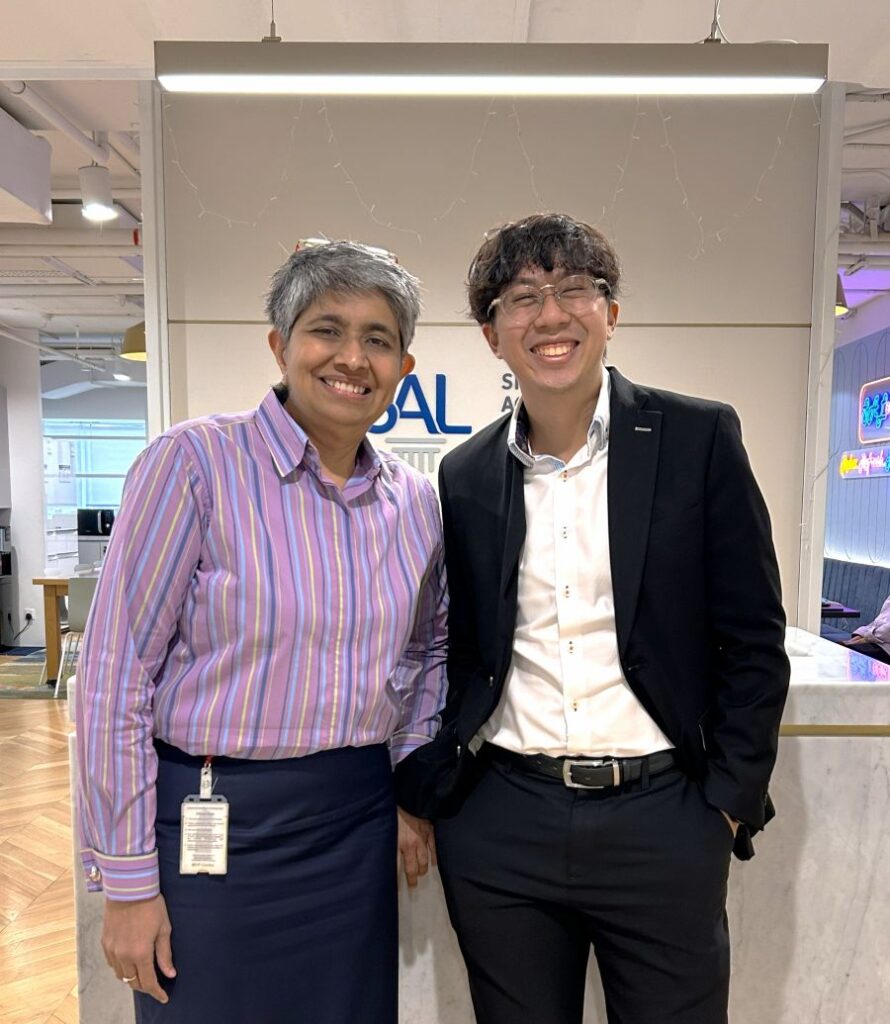
More than 30 years separate Ms Preetha Pillai and Mr Timothy Hsu’s calls to the Bar. But when they sat down to compare notes on a life in the law, they found they had more in common than either expected.
Preetha entered practice in 1993, when the arrival of a computer on every lawyer’s desk felt revolutionary. Timothy was called three decades later, when conversations about artificial intelligence (AI), wellbeing and the long-term sustainability of legal practice have come to the fore.
Despite starting practice in different eras, both found themselves returning to the same question: how can the profession remain one that lawyers want to build a career in? It’s a theme that sits at the heart of this month’s Legal Profession Symposium, which both plan to attend.
For Timothy, the pressing concern is simple: if good lawyers continue leaving practice after only a few years, what does that mean for the profession? “If talented lawyers are always leaving the industry after four or five years, then the strength of the industry naturally won’t be there,” he says. “We’ve got to find a way to make practice more sustainable.”
It’s something that Preetha, the local head of Conyers, is mindful of as well. “There’s quite a lot of worry that AI will replace people,” she says. “But if you use it in place of training junior lawyers, then the firm will not exist after you. You want succession: you would want the person who is now a junior partner to be the next head of the office, the one who is now counsel to be the next junior partner and so on. And you want lawyers who value AI ethics and use technology sensibly as they deliver professional services.”
A Generational Reckoning
That concern for the profession’s future extends beyond technology. It also shapes the way different generations of lawyers work with, learn from and support one another.
Our conversation came on the heels of the release of the Legal Profession Sustainability Study — Timothy especially welcomed its findings on the Bar’s relationship with the Court. “The issues are well known among lawyers, so I really appreciate that there are plans to address this.”
Preetha sees this as a generational reckoning. “There were lots of things that previous generations had stomached before. I never experienced it, but I have heard of bosses who threw files at juniors, yelling — things that young lawyers at that time tolerated but which will not be accepted today. So as leaders, we need to adapt to current expectations and norms.”
She suggests that fellow leaders hold firm on quality and reliability, but exercise some flexibility on non‑essential habits, such as start times and hybrid work, as a way of attracting and retaining young lawyers.
For Timothy, however, sustaining a legal career is not solely the responsibility of firms or senior leaders. Young lawyers, too, have a role to play.
“That’s one of the reasons I’m attending the Symposium,” he says, adding that he is looking forward to hearing from Professor Tan Seow Hon, whose research explores how lawyers can connect their sense of purpose with their careers and navigate the obstacles to a sustainable legal career.
When asked what advice she would offer a lawyer at the beginning of their career, Preetha’s answer had little to do with technical legal knowledge.
“Stay curious,” she says. Too often, she explains, clients ask one question when what they really need help with is another. Good lawyers learn not only to understand the law, but also the problem behind it.
Before the conversation draws to a close, Timothy poses a question that many young lawyers quietly wonder about: does practice become more sustainable as you grow more senior?
Preetha doesn’t offer false reassurance. Responsibility and expectations grow. But so does perspective. Rather than taking every client call herself, Preetha says she deliberately gives younger lawyers opportunities to lead. “Without practising, they won’t learn it for themselves,” she says.
To her, the role of a senior lawyer is not to only solve problems, but to also help others learn how to solve them too. That sense of continual growth is what has kept her engaged after more than three decades in practice. “I like my job,” she says. “There’s always something new.”
It is perhaps a fitting way to end a conversation between two lawyers at opposite ends of their careers — but who are pondering the same questions.
Join Preetha and Timothy at this year’s Legal Profession Symposium, which invites members of the profession to continue the conversation on future-proofing the legal profession.