

When Access to Justice Takes the Stage

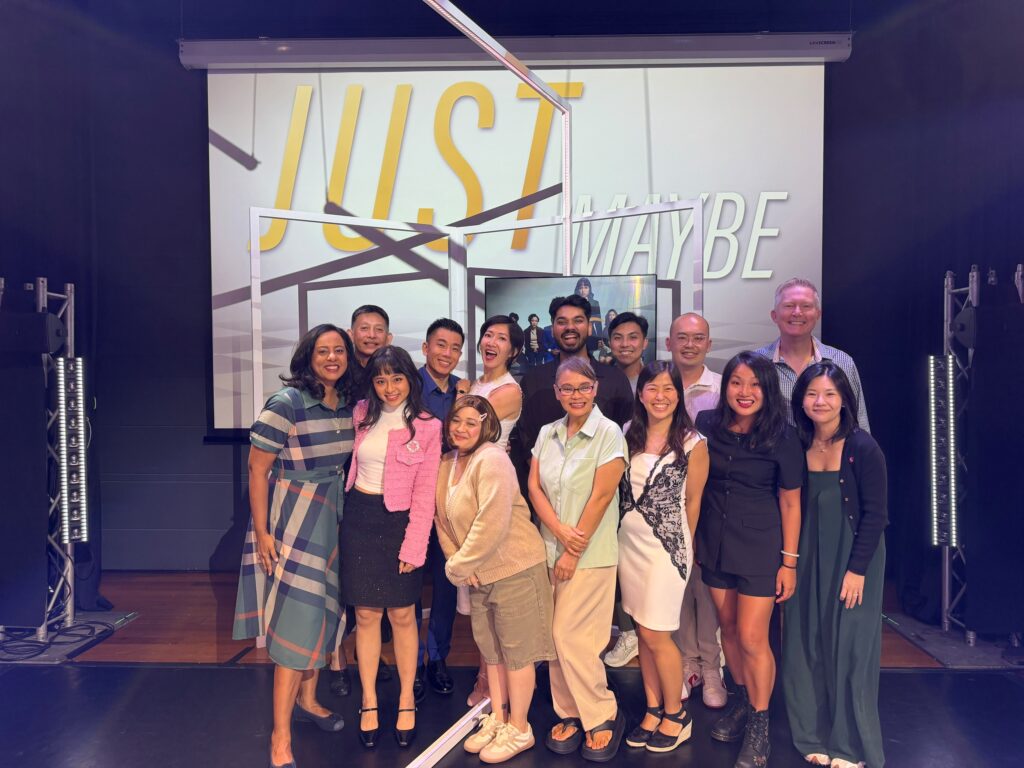
Access to justice has never been just an abstract ideal for Ms Viviene Sandhu, a Co-Managing Partner at Clifford Law LLP.
While it is often discussed in panel discussions, policy papers and reports, Viviene believes its true meaning lies in the lives of the people it affects.
That conviction led her to wonder whether theatre could spark a different kind of conversation — one that helps audiences move beyond understanding an issue intellectually to experiencing its human impact.
Theatre as a Different Kind of Conversation
That idea became Just Maybe — a theatre production she commissioned as Pro Bono SG Ambassador.
“There is something about sitting together in a theatre and watching a story unfold in real time that simply cannot be replicated,” Viviene says.
Rather than writing or performing in the play herself, she commissioned theatre professionals to bring the production to life.
“It takes expertise to write, direct and perform a play well. I wanted to treat it professionally and allow those with the right skills to tell the story.”
Bringing Overlooked Experiences into View
Just Maybe centred on those who fall through the cracks — people who do not qualify for legal aid but cannot afford legal representation either. Instead of presenting their experiences through statistics or case studies, the production invited audiences to witness the realities they face.
“The power of theatre is that it creates empathy. It’s one thing to read about these issues. It’s another to watch them unfold.”
Viviene was especially keen to shine a light on migrant workers and foreign domestic workers, whose contributions and struggles can too easily go unnoticed. As a working mother, she understood this personally.
“My helper was an integral part of our household,” she says. “These individuals support families in ways that are often invisible, and they deserve dignity, respect and protection. They have rights, and it is important that we recognise that.”

Shaping a More Human Practice of Law
Beyond raising awareness, the production also encouraged members of the legal profession — and those preparing to enter it — to reflect on what it means to practise law with humanity.
That was especially important when it came to law students in Singapore, who are required to complete pro bono work as part of their training. Viviene wanted them to see pro bono not as a requirement to fulfil, but as an opportunity to engage with people whose circumstances may be very different from their own.
“This group has a special place in my heart,” she says, “partly because I have children at that stage of life. I think it is an important time to shape how they see the law and their role in it.”
“Getting a law degree is one thing. Becoming a lawyer is about understanding people — their circumstances, their struggles, and the realities of life that don’t always fit neatly into legal frameworks.”, she added.
She hopes the play brought students, practitioners and members of the community together through a shared experience, leaving audiences with perspectives that linger long after the final curtain.
Although Just Maybe has completed its run, the questions it raises about access to justice, empathy and the role each of us can play remain just as relevant today.