

From the Fringes to the Front Line

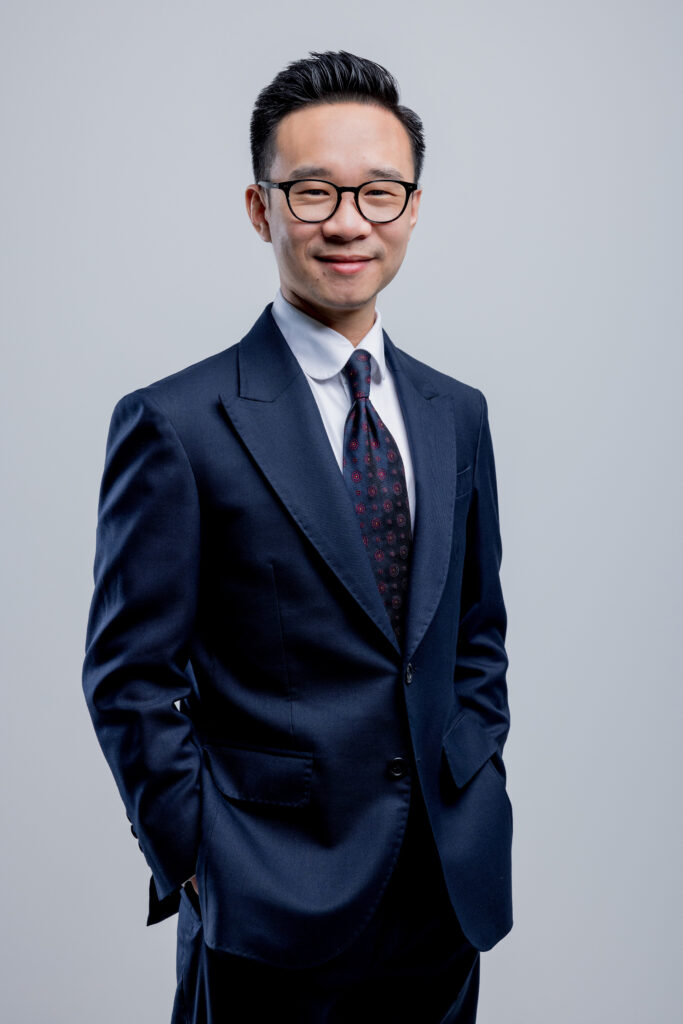
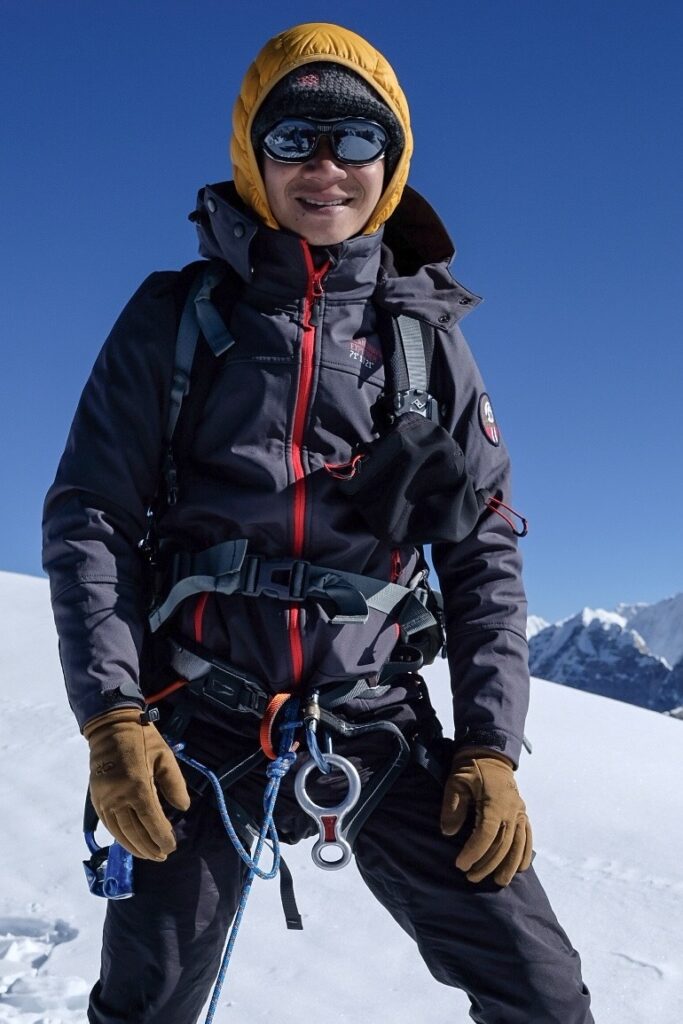
Before he was a criminal defence lawyer at Andre Jumabhoy LLC, Mr Aristotle Eng was, by his own account, a difficult youth. Frustrated by his inability to change the injustices he saw around him, he grew angry, restless, and drawn to an unconventional life. He took up mountaineering in Nepal and, for a time, seriously considered migrating there to rear yaks on a farm.
This isn’t the usual origin story for a lawyer in Singapore. However, for Aristotle, that early rebellion and his winding journey back from it are closely tied to the criminal defence practice he has built. His experiences suggest that becoming a good lawyer is rarely straightforward, and the qualities that once got him into trouble are the ones that now serve his clients best.
A Restlessness with Nowhere to go
In his early youth, Aristotle’s rebellion had no clear target. Sharp-tongued and impatient with authority, he often clashed with his teachers and got sent out of class for questioning them.
“Growing up, I had an abundance of energy and a strong desire to make a difference against the injustice in the world,” he recalls. “Being unable to effect any change in my youth made me very angry, and I had nowhere to displace that energy. I became rebellious and wanted to lead an unconventional life.”
That restlessness took him to mountaineering in Nepal during the holidays. He even considered migrating there to raise yaks on a farm. At Temasek Polytechnic, that same restlessness showed up as truancy. He would sign in for class, then slip away to a quiet hut by Bedok Reservoir to sit out the day.
An internship at Peter Low LLC, a public interest firm, helped him focus that energy. While there, he watched an old schoolmate plead guilty and walk out alone, without a lawyer and without anyone in the gallery. It was at that moment that he found a cause worth fighting for. He realised he wanted to help people who lacked the means or knowledge to defend themselves in court.
Three Rules for Law School
Aristotle applied to the Singapore University of Social Sciences (the “SUSS”) for its focus on criminal and family law. During the SUSS entrance interview, when asked why he thought he was a good fit for law, he compared it to his mountaineering experience: “You barely eat, you barely sleep, and it’s always an uphill battle.” Indeed, the mountaineer’s tolerance for sleepless nights and uphill battles was rechannelled into an intensity that he brought to his first years in law school.
Aristotle set himself three rules for his time at SUSS.
The first rule was never to let the fear of looking foolish stop him from asking a question in class. “Perhaps to the dismay of my lecturers, I questioned everything from the content of my study units to what we were being taught in class.” This habit fostered an inquisitive nature and the confidence to express his thoughts, which now help him question the evidence presented in court.
The second rule was to treat mistakes as opportunities to learn. He and a law school friend would sometimes draft two answers to an assignment, “One which we thought was the model answer, and one which we thought was the correct answer, i.e, the argument we would use if we were lawyers in a real case.” They always submitted the second. They reasoned that, unlike in practice, “there was no real client to suffer from our mistakes.” This sometimes cost them marks, but they treated each poor grade as a chance to refine their thinking.
The third rule was to genuinely strive to understand a subject rather than chase good grades . He asked himself, “Am I thinking like a law student, or am I thinking like a lawyer?” He spent much of law school reading beyond the syllabus to understand the cases behind it. Today, this lets him spot when opposing counsel’s cited authorities do not, on closer reading, actually say what they claim.
When asked at his final viva for the Legal Clerkship Programme whether he had changed, Aristotle gave an answer he still stands by: “I changed that which required changing, but retained that which makes me who I am.” He adds, “I think I’ve kept my boundless energy and my resilience to hardship, while shedding the anger and rebelliousness that came with them.”
A Voice for the Vulnerable
The grit from Aristotle’s youth shows up in how he approaches his cases. “I don’t encourage not eating and sleeping,” he says, “but having the grit and resilience to fight each case with everything that I’ve got has made the difference in many of my cases.”
In his criminal defence work, Aristotle has represented people with intellectual disabilities, people living on the margins of society, and clients who lack the means to advocate for themselves in court.
Even when a client comes in ready to plead guilty, he sees it as his duty to first check whether a viable defence exists. “Certainly, it would be easier to have them plead guilty and move on to the next case,” he says, “but being a voice for the ‘voiceless’ is about speaking up for my clients and vigorously pursuing a credible defence in court.”
A moment from his practice training with a veteran criminal defence lawyer, Mr Peter Fernando, clarified this for him. During a consultation with a client accused of serious sexual offences that he denied, the client’s mother began apologising for not raising her son well. His pupil master “leaned over the table and very sternly told her to stop speaking,” Aristotle recalls. He said, “He has not been found guilty under the law, so why are you assuming that he is?” For Aristotle, the moment “reinforced in me the presumption of innocence and our role as lawyers toward our clients.”
Never Give Up, Go at Your Own Pace
For students who identify with his younger self, Aristotle’s message is never to give up and to go at your own pace.
Aristotle credits the people who helped shape him along the way. During his internship at Temasek Polytechnic, he worked with Mr Peter Low, Ms Christine Low, Mr Choo Zheng Xi, Mr Raj Mannar, and Mr Terence Tan. “These lawyers showed me that the practice of law is about people,” he says, “and that the effort we put in ultimately goes towards helping others.” In his day-to-day work, he is grateful for his mentor, Mr Andre Jumabhoy, who always encourages him to do his best, especially in difficult cases.
Their mentorship has shaped his belief that law requires heart and courage in equal measure. To Aristotle, being a good lawyer starts with being a good person. “You cannot be a lawyer without integrity, courtesy, and diligence. Reading the law is far less challenging than mastering the values that make you a good person.”
In the end, Aristotle’s two identities are not easily separated. The mountaineer who once measured himself by sleepless nights and uphill battles is the same person who now measures himself by what he owes his clients. The determination once directed at chasing peaks alone is now focused on standing beside people who might otherwise face court alone.
Perhaps this explains why Aristotle resists the notion that he has changed so much after all. He has redirected the qualities that once made him difficult toward a summit worth reaching, in pursuit of justice.