

Peggy Yee: Advocacy with Purpose

From a recession-era job seeker to the co-chair of a national taskforce on inclusive justice, Peggy Yee has spent her career proving that the practice of law is, at its best, a calling to speak up for those who cannot speak for themselves.
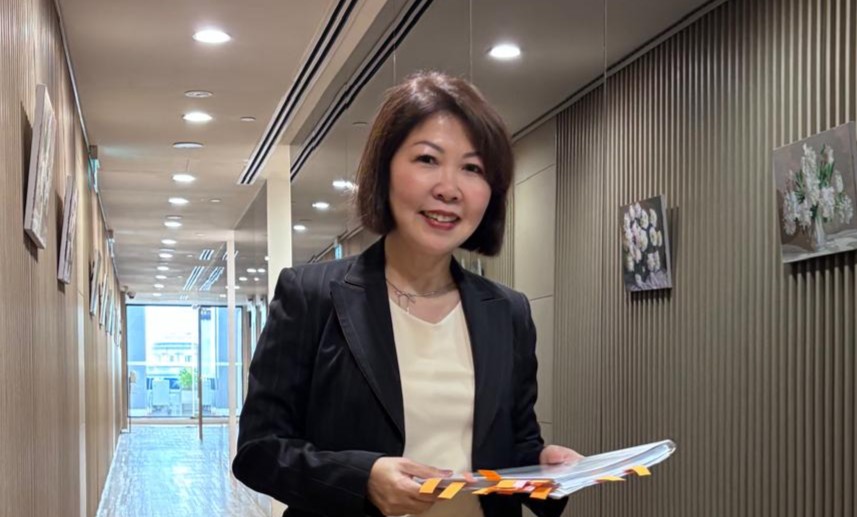
There is a question Peggy Yee has asked herself many times over the years, “Who is sitting beside you today?” It is a question she has posed to fellow lawyers, to prosecutors, to social workers, and to anyone willing to pause and reflect. Behind the person in the dock, or across the table from you, there may be a story that is not immediately visible: a hidden disability, an undiagnosed condition, a life shaped by circumstances untold. Recognising that story, Peggy believes, is where justice begins.
Today, Peggy is the Founding Director of PY Legal LLC and the co-chair of the newly launched Inclusive Justice Taskforce, a cross-agency body set up in January 2026 to examine how Singapore’s criminal justice system can better support persons with disabilities and mental health conditions. This is a long way from where she started.
An Unplanned Start
Peggy is refreshingly candid about how her career began. “There is no fairy tale answer to this,” she says. “It wasn’t as if I started out with this ambition to ensure access to justice for the underserved or overlooked communities.” When she entered law, it was at the height of a recession. Her immediate goal was simply to secure a job — to “cease being a cost centre.”
Peggy entered legal practice and through individual cases, realised that case work could be the entry point to something far larger. “After doing singular cases, I realised that bigger impact could be had if there was systemic change,” she reflects. “You could say I like to think big picture. The thought bubble in my head just grew and grew.
From that insight, she found her calling advocating for persons with invisible disabilities such as autism spectrum disorder (ASD), attention deficit hyperactivity disorder (ADHD), and mental health conditions. The individuals she encountered in criminal proceedings often had needs that were not immediately visible. A system built on assumptions of cognitive and emotional capacity was not always able to fully account for their circumstances.

One Convert at a Time
The phrase “one convert a day” captures Peggy’s persistent and grounded approach to her advocacy mission. For her, awareness is best built through human encounters.
The returns on that patient work accumulate in ways that resist easy measurement. In one pro bono case, Peggy represented a young adult with ASD and ADHD, who faced numerous charges for use of criminal force, intentional harassment, and unlawful stalking. Peggy persuaded the court that issuing a mandatory treatment order to address the underlying causes of the young adult’s behaviour would be more effective than a fine or imprisonment. The deputy public prosecutor told Peggy at the close of proceedings that she had learnt a great deal about these conditions through the case. That exchange gave Peggy what she describes as profound job satisfaction. “One convert a day,” she says, simply.
Peggy believes that the legal profession is uniquely positioned to drive this kind of change. “The practice of law is a noble one,” she says. “We, as advocates, are uniquely placed and have the capacity to use it for good and impact.”
What began as case by case advocacy gradually grew into something larger and more structural. In March 2025, she convened the inaugural Access to Justice Symposium, bringing together stakeholders from the legal, social service, healthcare, and policy sectors. Then-Second Minister for Law Edwin Tong SC endorsed her call for an inter-agency approach.
Peggy’s efforts directly led to the Inclusive Justice Taskforce, co-chaired by Peggy and Senior Parliamentary Secretary Eric Chua, being formally launched in January 2026. Its sweeping mandate involves examining the entire criminal justice process, from the pre-offending stage through post-sentencing support, and to propose reforms for persons with disabilities and mental health conditions.
Peggy has been a one-woman force behind her cause — unaffiliated with any organisation or charity. This had led to doubters who cannot understand why she would, or could, expend so much of her own personal time and effort, without payment. Undaunted, she presses on.
She also embraces her role as a lawyer with gratitude, “It is from this role that I have the privilege of being able to speak up, and speak out. This is something I value much, and am always grateful for.”
The Cost of Commitment
Peggy has been called “crazy” more times than she cares to count. Crazy for taking on pro bono matters that took time away from fee-earning work. Crazy for dreaming up initiatives. “I never saw it as a trade-off, I just did it, adding on more and more layers of commitment to my causes,” she says.
Peggy wears the label lightly, but she does not pretend that the choices came without cost. She recently asked her now twenty-four-year-old daughter whether she had felt neglected growing up. The answer was an honest, “Yes.” There were times she wished her mother had been more available. But she also shared that she had learnt from watching Peggy juggle her roles as wife, mother, daughter, and lawyer.
The same honesty extends to how she speaks about her own health. Peggy has shared candidly about her cancer diagnosis. When surgery was scheduled, she negotiated to delay it by five days to see a case through to its conclusion. “That was a very difficult time of my life,” she reflects. “Looking back, it was also a time of much mercy and grace. I experienced so much love and support, from my family and my tribe.” She describes herself as stubborn and is clear that the support of her family, colleagues, and community was what enabled her to navigate that period.
Redefining Success
She is also practical about what makes sustained pro bono and social impact work possible. Running her own practice has given her a degree of autonomy that she recognises is not available to everyone. “Support from employers and partners is crucial,” she acknowledges. Her advice to younger lawyers is not to wait for the perfect conditions: “Start small, start slowly, but start. Do what you feel called to do.”
What gives Peggy hope is that the conversation she has been part of for years is growing louder. “The conversation about invisible disabilities is getting louder and stronger,” she says. “I am especially heartened by the affirmation of my colleagues in the legal fraternity who have expressed their encouragement at what has been called my ‘crazy non-paying work’.” “Advocacy is never finite”, Peggy says. Neither, it seems, is Peggy.