

Published in:
Speeches
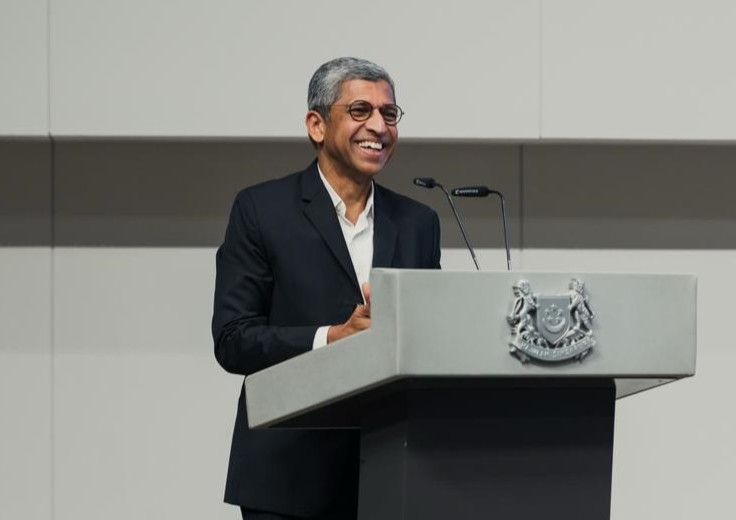
Speech by Justice Hri Kumar Nair at Hackathon for a Better World 2026

Speech by Justice Hri Kumar Nair at Hackathon for a Better World 2026
Monday, 27 April 2026,
Supreme Court of Singapore
Monday, 27 April 2026,
Supreme Court of Singapore
- Good afternoon.
- It is my pleasure to join you today at the opening of the Hackathon for a Better World 2026, jointly organised by DBS, the Singapore Courts, and the Singapore Academy of Law (or “SAL”).
- The legal sector is undergoing profound changes driven by:
- Rapid technological advancements — particularly in AI
- Globalisation of legal services
- Evolving and greater client expectations and business pressures
- I was in private practice for over 25 years, and I can tell you from first-hand that the pressures of practice have changed drastically. The profession’s evolving demands and rapid developments require a re-think on basic and fundamental aspects of legal practice, including how lawyers are educated, recruited, trained, managed and developed, and how law firms are organised and how law practices are operated. All aspects of legal practice need to be reviewed. This is critical if the legal profession wants to continue attracting and retaining the best and the brightest of talent.
- For Singapore, as a small and open economy, these shifts are more pronounced.
- At the Legal Profession Symposium (“LPS”) last year, organised by SAL, several key challenges were highlighted confronting the profession:
- Intensified commercial pressures
- Heightened global competition
- AI-driven disruption
- Sustainability concerns such as lawyers facing burnout and facing gaps in mentorship
- We have seen pressures steadily increasing. That makes this year’s theme is especially timely: Future-Proofing the Legal Profession.
Future of the Legal Profession & Purpose of the Hackathon
- Doing nothing is not an option. That is why SAL has established the Future of the Legal Profession (“FLP”) Committee, which I am involved in, to study a longer-term, strategic view of how the sector must evolve.
-
The FLP’s work is organised around key workstreams aimed at strengthening capability, advancing responsible technology adoption, and building a more sustainable profession.
-
But no single person or institution has a monopoly of solutions to these issues. The wisdom of crowds has shown that the collective opinion of diverse and independent group of people such as yourself, yields the best judgment.
- This Hackathon is intended to put that principle into practice. It is an opportunity to examine how legal work is currently carried out and to rethink established processes across the legal practice, the courts, and the broader system.
Past Editions of Hackathon
- Past editions of the Hackathon illustrate the value of this approach.
- In 2020, ideas contributed to simplifying probate processes and with elements taken up by the courts.
- In 2024, a mock-up platform was developed to assist litigants-in-person, drawing on contributions across different sources.
- They have shown that when collaboration is purposeful, ideas can move beyond exploratory discussion into meaningful impact.
Challenge Statements
- This year’s edition is quite different. It is a considerable step up in the challenges it offers and the impact its ideas may have in shaping the future of the profession. It brings together a diverse group of lawyers, professionals, and tertiary students to address some of the key priorities of the profession today. These are:
- Strengthening cross-border legal capability
- Integrating artificial intelligence responsibly
- Sustaining a rewarding and resilient legal practice
-
Participants, I urge you, to focus on practical solutions to address these concerns, including:
- Rethinking traditional models such as billable hours
- Exploring how Corporate Counsel and clients can better incentivise the adoption of legal technology and AI among law firms
- What younger lawyers see as meaningful steps to drive sustainable practice
- How such principles can be more effectively implemented in practice
- Nothing is off the table, and no idea is too small.
- You will not walk alone. Participants will be supported through:
- A design thinking workshop conducted by DBS
- Guidance from experienced design mentors
- These mentors will help refine ideas, challenge assumptions, and support the translation of concepts into implementable solutions.
Roadmap
- Over the coming months, participants will take ideas through a structured journey from concept to implementation. The design thinking process will challenge you to:
- Move beyond incremental improvements
- Question assumptions
- Embrace diverse perspectives
- Focus on delivering solutions that are implementable
- I encourage all participants to immerse yourselves in this journey, engage actively in the workshops and challenge yourselves to think out of the box.
- The strongest ideas are innovative and grounded, impactful, and capable of real-world application.
- Shortlisted teams will showcase their work at LPS 2026 in July and contribute to broader conversations across the profession.
- This Hackathon is not an isolated exercise; it builds on wider efforts across the profession including focus groups with young lawyers and in-house counsel on how the changes they wish to see can come about. Good practical solutions that you come up with will not disappear.
- At last year’s LPS, SAL launched the Mindful Business Movement to create a community of practice aimed at building sustainable workplaces.
- This has been followed by initiatives such as the Living Case Study portal, which shares practical resources and fosters continued engagement on all issues concerning the future of our profession.
- Ideas generated through this Hackathon will feed into these broader efforts.
- While this is a competition and there are attractive prizes up for grabs, I would urge you to put that aside and consider the stakes. We are not dealing with minor inconveniences or minor tweaks to the system, but existential risks. The ultimate prize is finding practical and successful solutions which will benefit all of us, especially our younger members who will inherit the profession in years to come.
Panel Session
- Today’s panel discussion: Charting the Path Forward, serves as a fitting curtain-raiser.
- The panel will explore how Singapore’s legal profession can compete globally, adopt AI meaningfully and responsibly, and sustain legal practice over the long term.
- Our panellists will share their perspectives, with SAL’s Assistant Chief Executive Paul Neo as moderator. I look forward to the discussion.
Acknowledgements and Close
- Let me close by acknowledging our partner organisations, DBS and SG Courts. Your support is particularly vital this year, given the serious matters at stake on the table. I express my heartfelt thanks for your contributions.
- I look forward to the ideas that will emerge, the conversations that will unfold, and the impact all of you will create.
- Thank you.