

Weaving the Tapestry of Family Law

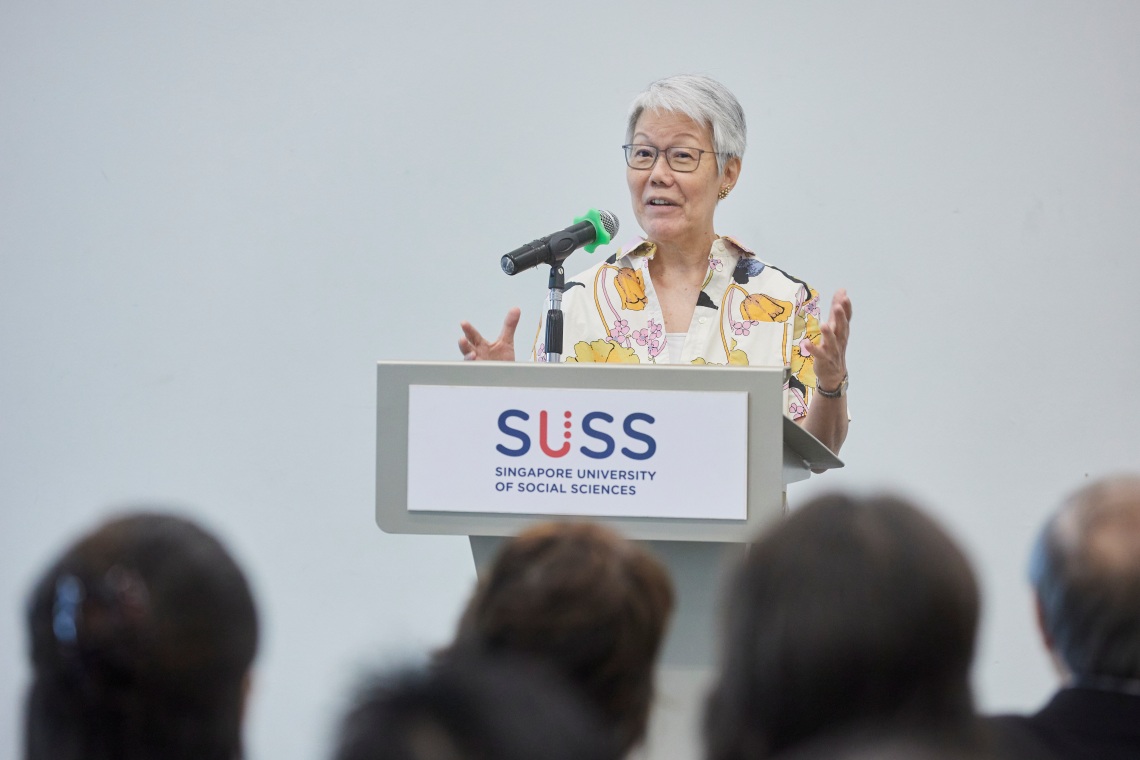
For nearly five decades, Professor Leong Wai Kum has mulled over one question: how can the law possibly help people build stronger and healthier family relationships?
Her latest book, Parents, Children and Guardians, explores this question within the network of adults entrusted with a child’s upbringing, from the child’s parents and guardians to strangers including foster parents and child protection officers.
Continuing from her earlier book, Marriage, Spouses and Assets, her latest book reflects her lifelong work to understand family law not as a collection of rules. She likens it to a tapestry, in which legal principles, statutes, court decisions, procedures and processes must work together to support families and create an environment in which children can thrive.
“Family law must always choose the gentler response to family dysfunction,” she says. “The law inspires the best from the adults and shows them how to be good parents.”
To Professor Leong, family law is not only concerned with resolving disputes after relationships have broken down. Family law plays a role across the whole spectrum – it inspires, teaches, guides, controls and, where necessary, addresses, detrimental conduct within familial relationships.
Looking Beyond Divorce
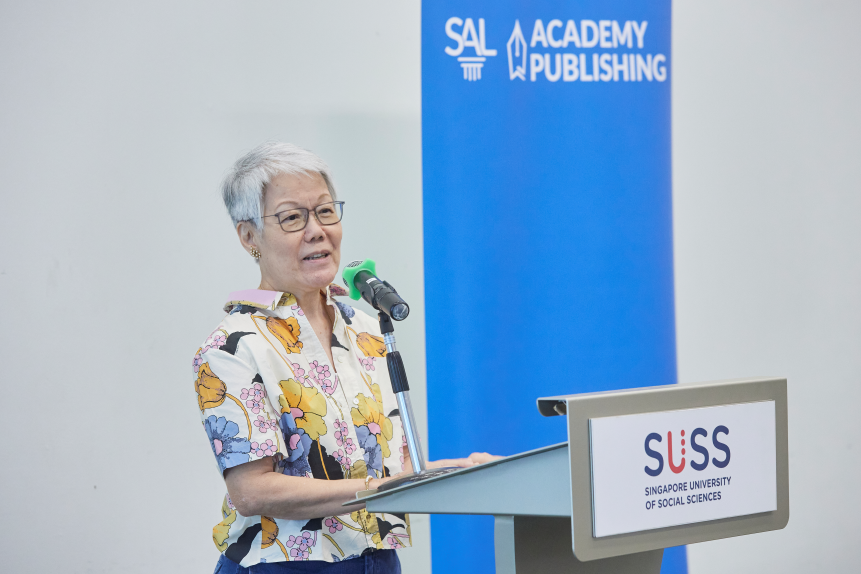
Professor Leong’s interest in family law began in 1976, when she joined the then University of Singapore Faculty of Law as a young lecturer.
Upon graduating with the inaugural law cohort of the University of Malaya, Professor Leong was new to Singapore’s legal system when she was assigned to teach family law. The expectation was that she would have time to learn under the then family law doyen.
Just months into the job, she was unexpectedly asked to take over the entire, then compulsory, Family Law course after the doyen decided to leave academia. Still new to university teaching, Professor Leong found herself lecturing to more than 100 students while guiding the team of adjunct teachers who led discussions across most of the tutorial groups.
“I was really thrown into the deep end,” she recalls with a smile.
Yet very quickly she came to love the subject and became drawn into its real impact on improving people’s lives. The leading English textbooks at the time never appealed to her. They tended to move quickly from marriage to divorce, as though the law had little to say about the marriage itself.
“There is a great deal of living between getting married and getting divorced,” she thought. “Surely the law has something meaningful to say to the married couple while they remain a married couple.”
A Uniquely Pivotal Statutory Provision
That observation led her to study Singapore’s Women’s Charter 1961 more carefully. Over time, she began to see the significance of what section 46 is now. Through her research and writings, Professor Leong actively advocated the interpretation that section 46 requires spouses to regard one another as equals and to cooperate with each other for mutual benefit. Spouses may take on different roles during a marriage, but each role must be equally valued.
Though there is no direct sanction for breaching it, Professor Leong regards the Women’s Charter 1961 section 46 as uniquely pivotal to Singapore family law. Her first book examines its role in shaping the marital relationship.
Through a second thread of research and writings, Professor Leong actively advocated that section 46 further demands that parents must view each other as equals, aim to cooperate in parenting and always exercise parental authority for the well-being of their child.
Long before “parental responsibility” became widely adopted internationally, she argued that Singapore law had already laid the foundation for legal regulation of parenting to revolve, not around parental rights, but upon parents owing responsibilities to their child. Through decades of scholarship and judicial development, she can now take pleasure in seeing the idea evolve into substantive legal demands adopted by the highest courts.
Today, Professor Leong identifies at least three key principles of parental responsibility. Parents should regard one another as equals and cooperate in raising their children. Whenever they exercise parental authority, their child’s welfare should be their foremost consideration. These principles continue to apply even after the marital relationship itself has broken down.
“This is why, when the Family Justice Courts make decisions regarding the custody, care and control, or access to children, the Judge is able to remind the parents that while their marriage may have ended, their parental relationships have not and the law demands they continue to discharge the responsibilities they owe their children,” she says.
Divorce ends the relationship between spouses, but not their responsibilities towards their child. While a child will inevitably be affected by their parents’ divorce, the law ensures that both parents continue to fulfil their parental responsibilities. For Professor Leong, this is central to the legal regulation of the parent-child relationship. Whether a marriage is strong or has broken down, family law remains concerned with protecting the child’s well-being. This responsibility can extend beyond a child’s parents. Professor Leong argues that guardians, foster parents and child protection officers should be guided by similar principles whenever they take on a role in a child’s upbringing. She calls this “guardianship responsibility”: the idea that every adult entrusted with a child’s care should act with the child’s well-being in mind.
“If you choose to care for a child, whether your own or someone else’s, you should behave as a good parent would.”
Seeing the Bigger Picture
Professor Leong describes family law as a tapestry.
“I often tell my students that if you only concern yourself with what appears first, you are only looking at the froth. Dig deeper and do not stop until you reach the bottom which is where holistic understanding resides,” she advises.
She encourages students and practitioners to look beyond the froth of the rules and judicial decisions and ask whether current understanding is synchronous with underlying theory. Sound interpretation, she adds, must also be supported by effective procedures and court processes. Every part of the tapestry must work well together.
This is Professor Leong’s “joined-up” approach to family law: one that brings legal theory, substantive law, judicial interpretation and procedure into a coherent whole.
At the centre of child law is a simple proposition: every adult involved in a child’s upbringing should act in a way that promotes the child’s welfare.
A Life’s Work
Nearly 50 years after she first entered a lecture theatre, Professor Leong remains engaged by the possibilities for family law to develop further.
New legislation, judicial decisions and changing social realities continue to present new challenges and opportunities for the field. Continuous professional learning and specialist accreditation all have a role to play in helping the profession meet them.
“Receiving a law degree only brings you to the starting line because graduation is not the end of learning,” she says.
It is a lesson she hopes future generations of lawyers will carry with them throughout their careers.
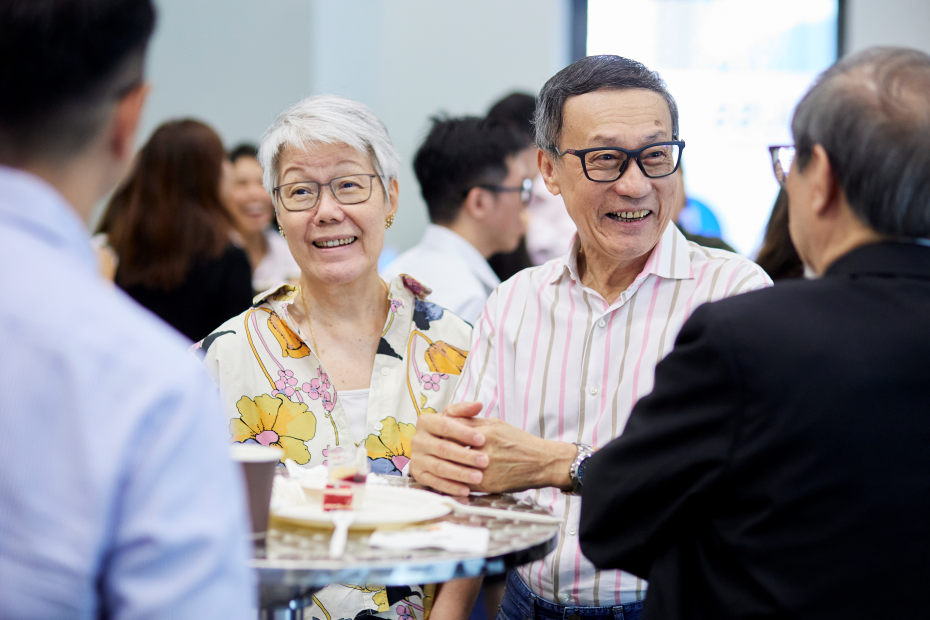
When asked whether she has ever tired of family law, her answer is immediate: “No. I still see so much that future Singapore family law academics can achieve.”
For Professor Leong, the enduring work is to keep refining the tapestry: helping people build stronger marriages, become better parents and create healthier families.